EoL In Jan 2025
Remarkable Celebration of Achievements at Sekem Farm
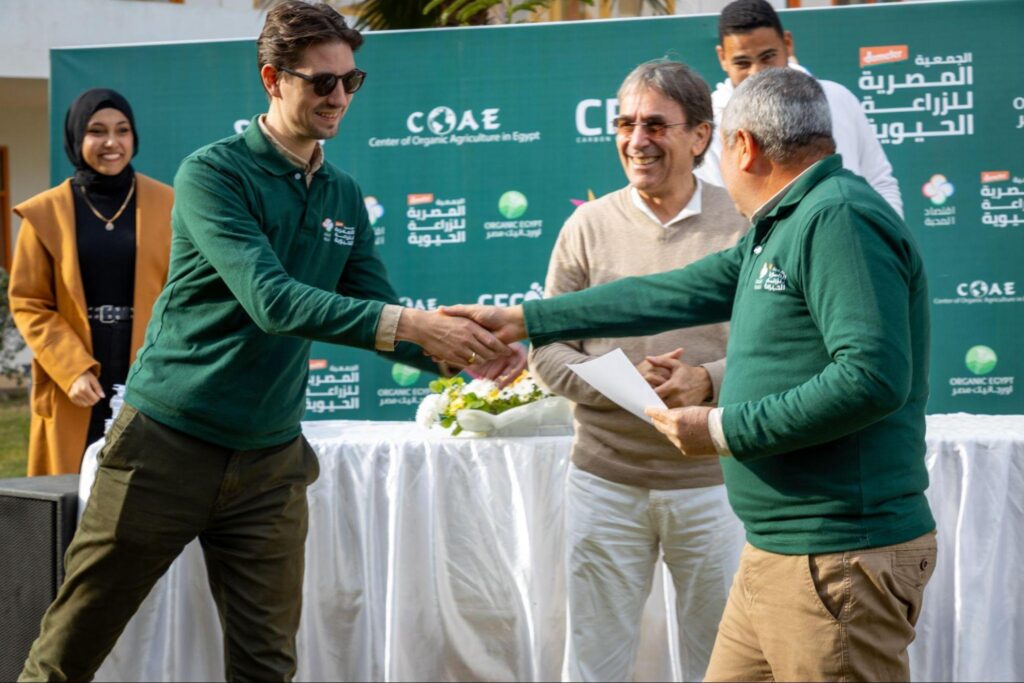
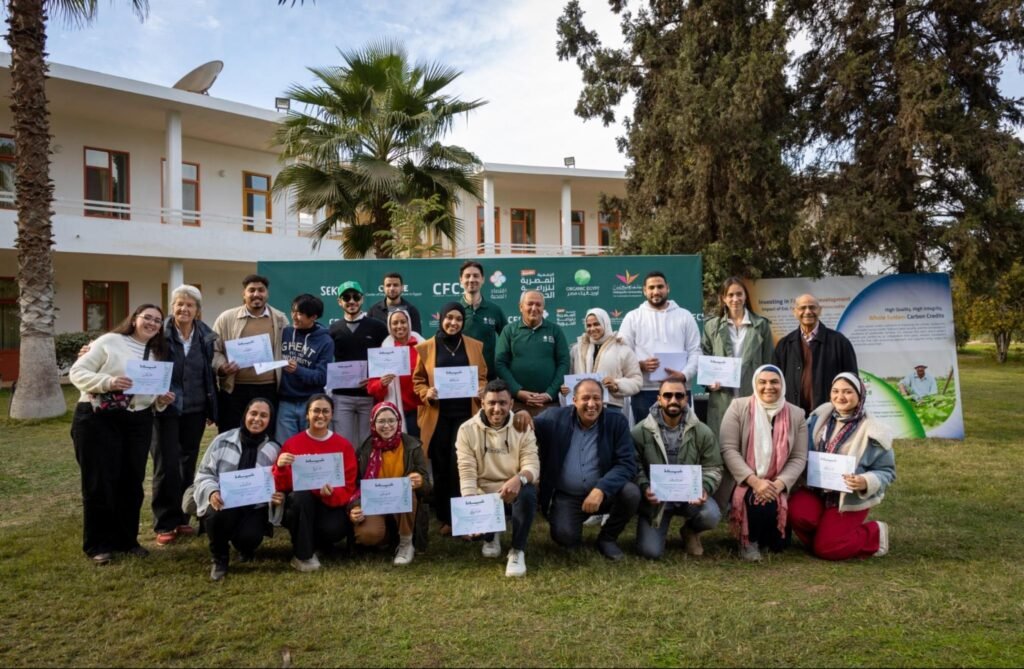
EoL-EBDA Celebration 2025
The new year’s celebration 2025, held on January 4th at Sekem farm, was a well-organized event that brought together the Egyptian Biodynamic Association (EBDA) and the Project’s Partners (COAE, CFC, and SDF), alongside all field staff, office staff, and farmer champions. The event honored the collective efforts in supporting the biodynamic farming sector in Egypt throughout 2024 and celebrated the farmers who played a vital role in mitigating climate change through carbon sequestration in the soil. One of the key achievements celebrated was the successful appointment of 50 new engineers across various governorates, further strengthening the team’s capacity to drive sustainable agricultural practices.
EoL Communications
In January, several impactful initiatives were completed to support EBDA’s outreach and education efforts. A series of 10 educational videos on mango cultivation was published on YouTube, covering topics from care to sustainability practices, each fully optimized with captions, thumbnails, and descriptions. The team also attended and documented the EoL event at SEKEM Farm, producing 2 well-received social media reels and finalizing 150 high-quality photographs for future campaigns. As part of the Climate Heroes campaign, 5 new reels were edited, spotlighting inspiring individuals leading climate resilience efforts. On the training front, the leadership course progressed with a focus on conflict resolution through active listening, empathy walks, and Case Clinics. Additionally, a public speaking course was launched for staff from EBDA, CFC, and Organic Egypt, beginning with improvised speeches and moving into structured storytelling and personal introductions. These efforts collectively enhanced visibility, engagement, and internal capacity-building across the organization.
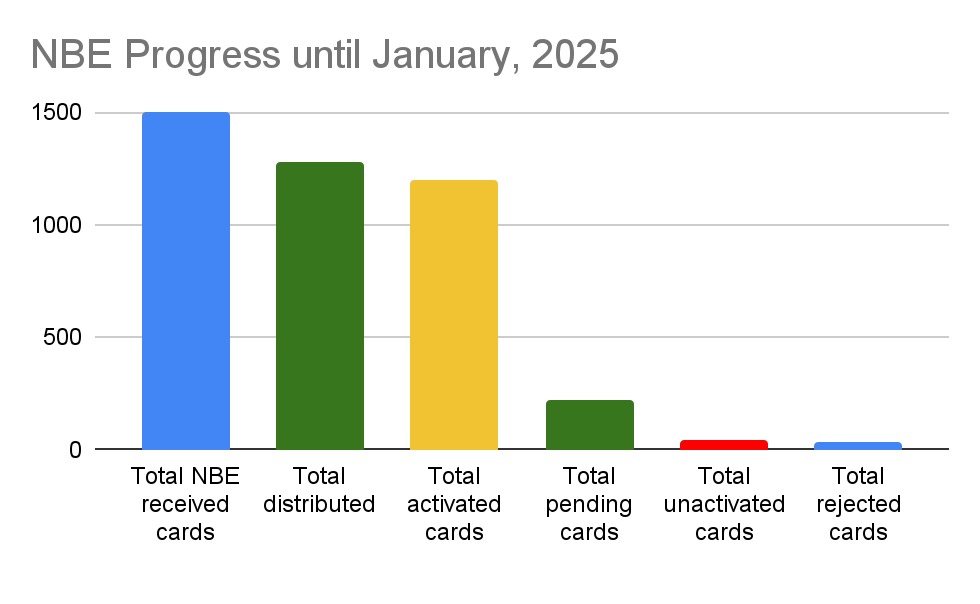
NBE progress “Latest Updates on the NBE Status”
Since the start of the initiative to provide 1,500 farmers with Meeza cards from the National Bank of Egypt (NBE) And EBDA are continuing to achieve ongoing success , EBDA assigned team agreed to start with 1,500 farmers, and we distributed this number across different governorates through the engineers of the Egyptian Biodynamic Agriculture Association (EBDA), The team have reached 1,282 farmers, with 1,201 cards successfully activated, and the team is currently working on the process of completing the remaining 218 cards to finish the phase ,This partnership supports the bank’s commitment to sustainable economic practices and aligns with the EBDA vision and mission, which focuses on ecological balance and improving the financial operations sustainably. NBE and EBDA work together to support farmers who practice organic/biodynamic farming, helping them achieve sustainable income in line with the economic goals of the Economy of Love (EoL) By backing these initiatives, NBE helps balance economic, environmental, and social goals, supporting a more sustainable future for agriculture
EoL Field Visits and Activities
1. January 4th -January 6th, 2025 International Fairtrade Audit
Location: El-Sedik Farm, Damietta region
Date: January 15th, 2025
Purpose: Conducting a biodiversity survey for farmers utilizing biodynamic farming practices on their own farms.
2. January 4th -January 6th, 2025 International Fairtrade Audit
Participants: Eng. Mostafa and Eng. Attia Sobhy
Date: January 4th -January 6th, 2025
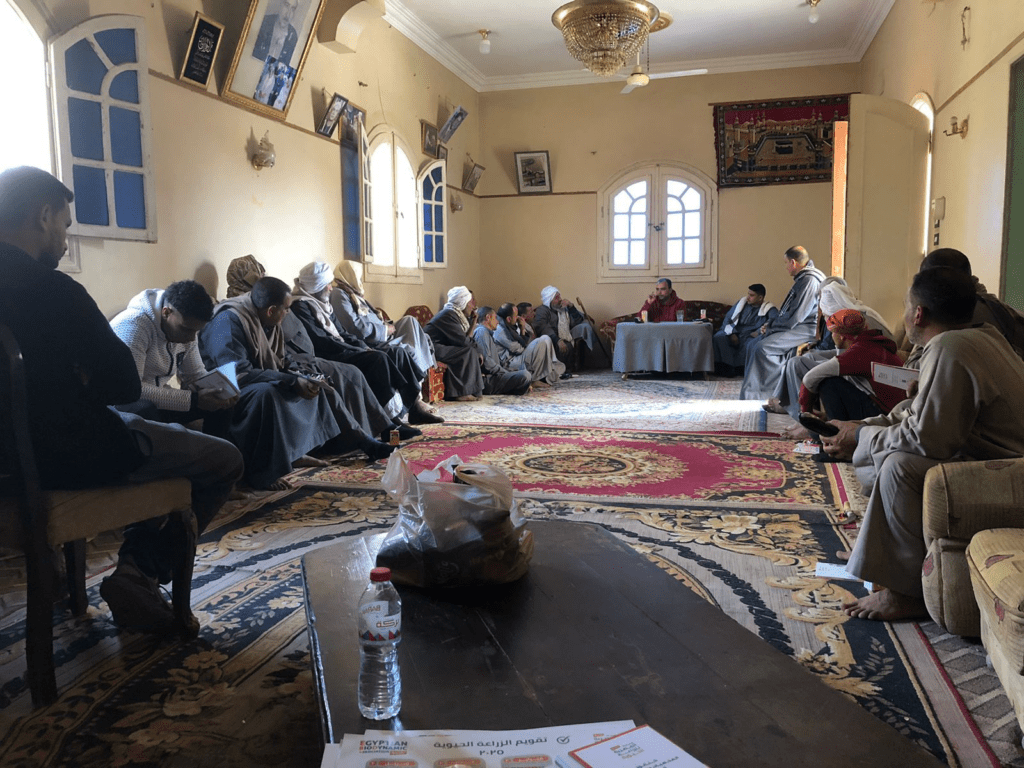
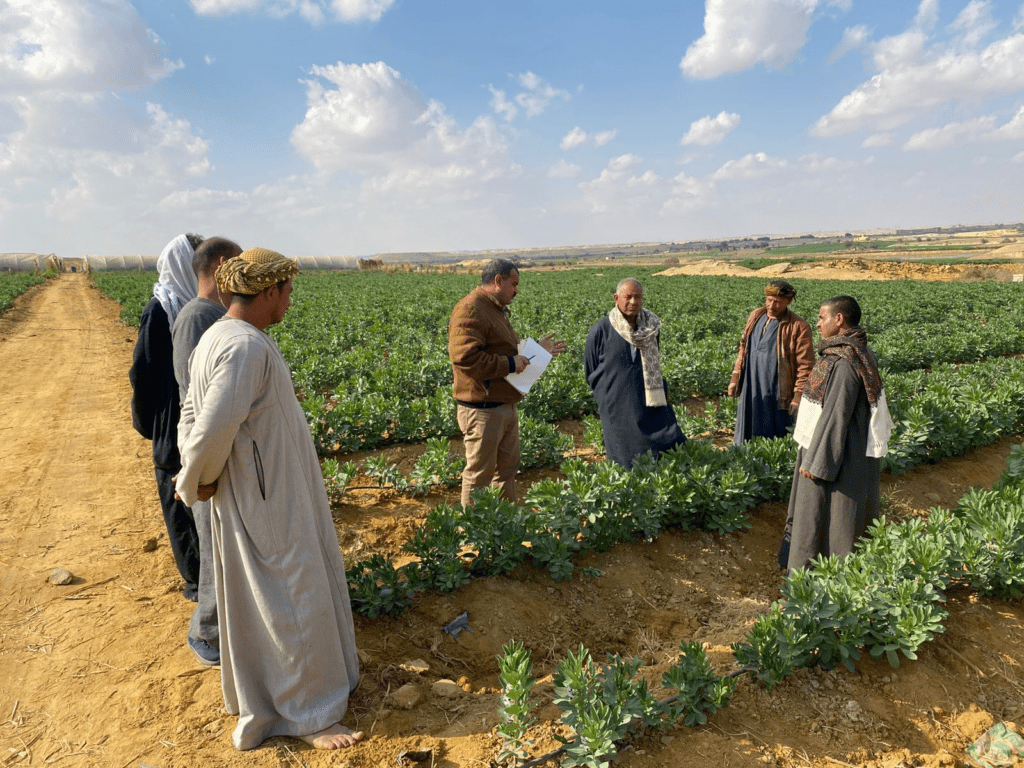
1.1 Pilot Study in Damietta
On the 15th January 2025, a pilot study on biodiversity performance at farms in Damietta was conducted. The previous pilot study in Wahaat
Challenges
Some farmers struggled to estimate the size of natural habitats around their production sites (e.g., shrubs, water channels, side roads).
The use of paper-based surveys limited the ability to scale up the research.
To address these issues
Ensure all farmers accurately report natural habitat areas in feddans.
Implement digital data collection tools like Google Forms or Kobo to facilitate easier expansion of the study in the future.
Challenges
Farmers’ literacy and digital literacy: some farmers cannot write and read, which makes it difficult to collect data through Kobo and Google Forms. Additionally, some farmers don’t have a phone or do not know how to use digital tools, which is also an obstacle to big-data collection.
b- Ownership of farms: some farmers are workers who do not own their farm. The survey was filled by these working farmers, but the results ended up the same as their owner since they work in the same farm by following the same farming practices. The solution would be to reach out to only multiple farmers since they have been trained for Kobo by EoL. However, this is expected to cause bias in the results.
c- Difficulty in language: some farmers found it difficult to answer questions since the sentences in the survey are too long and grammatically complicated.
Results
10 farmers filled the survey, and 10 reports were made for each farmer correspondingly as one of them is attached to this report in the section of Appendix. 4 farmers couldn’t read and write the Arabic language, engineers asked all the questions verbally and filled the survey on the behalf of those who didn’t have literacy. Although it was expected that 10 different results would be gained, 7 results turned out to be identical since 7 farmers work on the same farm. Therefore, 3 different results were gained from this trip to Damietta.
The general scores
Show that the category of farmed products stands at 13%, farming practices at 7%, small habitats at 24%, and large habitats at 33%. The scores indicate how much extent of biodiversity efforts are made at a farm compared to the best scenario defined by CFT. For instance, the farm adopts 13% of the items in the category of farmed products that are considered as beneficial for biodiversity. Overall, it is shown at this farm that the farmer makes relatively more biodiversity efforts to small and large habitats than to their cultivation area, and that there is much space for improvement in his biodiversity management practices.
Challenges
a- Farmers’ literacy and digital literacy: some farmers cannot write and read, which makes it difficult to collect data through Kobo and Google Forms. Additionally, some farmers don’t have a phone or do not know how to use digital tools, which is also an obstacle to big-data collection.
b- Ownership of farms: some farmers are workers who do not own their farm. The survey was filled by these working farmers, but the results ended up the same as their owner since they work in the same farm by following the same farming practices. The solution would be to reach out to only multiple farmers since they have been trained for Kobo by EoL. However, this is expected to cause bias in the results.
3- Meetings at the EBDA Headquarter
– Participants: Eng. Mostafa , Eng. Attia and various stakeholders
– Focus: Engaging with individuals interested in organic and biodynamic farming
– Registration of a new farm with 750 acres and a new company called Al-Amal for Agriculture Projects.
4- Visit to El-Waly Farm
– Participants: Eng. Mostafa and Eng. Attia Sobhy
– Date: January 4th -January 6th, 2025
5- Participatory Guarantee System (PGS) progress
The first round of 2025 began on January 1st, involving 1,020 farms. This follows the completion of review training for peer reviewers and new agronomists to accommodate the continually growing number of member farms. Meanwhile, the certification process for farmers from the first round of 2022 is underway, with 53 farms being certified by the Center of Organic Agriculture (COAE) under the EoL PGS.
EoL Agronomists Monthly Training
This month, the Economy of love (EoL) continued its intensive 17-module training program for its agricultural engineers, focusing on two crucial topics:
- Organic Poultry Production – Exploring sustainable and ethical methods for raising poultry without synthetic additives, ensuring healthier food and improved animal welfare.
- Organic Medicinal & Aromatic Plants – Learning best practices for cultivating, harvesting, and processing these valuable crops while maintaining biodiversity and soil health.
The training was interactive, equipping engineers with practical knowledge and hands-on skills that they will transfer to farmers across Egypt. By strengthening their expertise, EBDA ensures that more farmers can adopt sustainable, organic practices contributing to a healthier environment and food system.
EoL Farmers’ Growth
The EBDA proudly kicked off the new year by celebrating its remarkable impact alongside its dedicated team and valued partners. Together, we have reached an incredible milestone—engaging with 16,000 farmers—and we extend our deepest gratitude to everyone driving this mission forward. With an ambitious goal of scaling up to 40,000 farmers by the end of 2025, our journey continues with momentum and purpose.
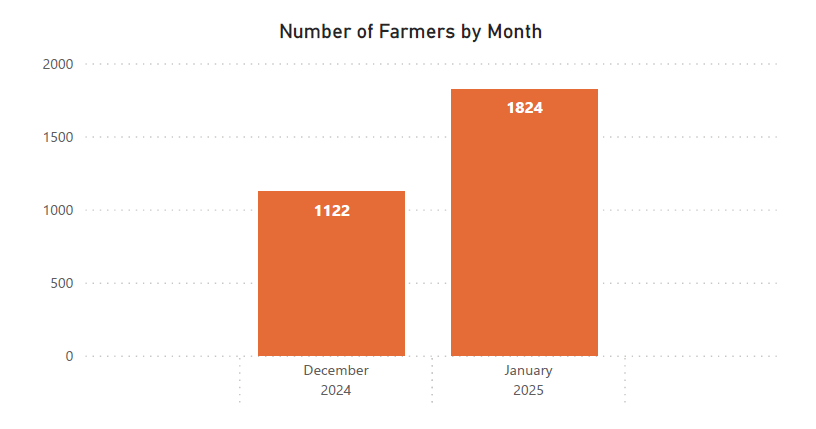
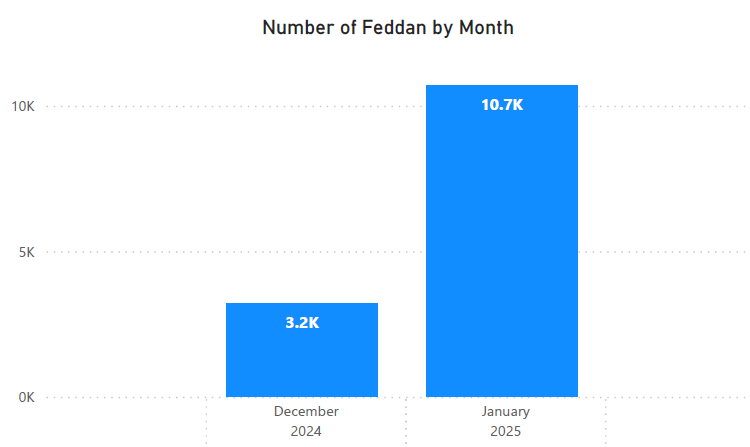
January 2025 has been another landmark month for the EBDA team across 18 regions in Egypt. Our 120 agronomists have made significant strides, successfully onboarding and registering 1,824 new farmers and 523 farms, covering a total of 10,700 feddans.